Agentic AI: Why most AI agents in technical procurement will fail
Comment by Robert Hilmer, CEO PartSpace
The consulting firm McKinsey & Company recently articulated an uncomfortable truth: The problem with AI in procurement is not a technological problem, but a leadership problem. In its report ”Redefining procurement performance in the era of agentic AI" the firm describes the shift from analytical AI - which operates under the motto “show me the data” - to “do it for me.” In other words, AI agents that autonomously take on tasks, simulate scenarios, and continuously learn. The message is clear: Those who don’t act now will fall behind.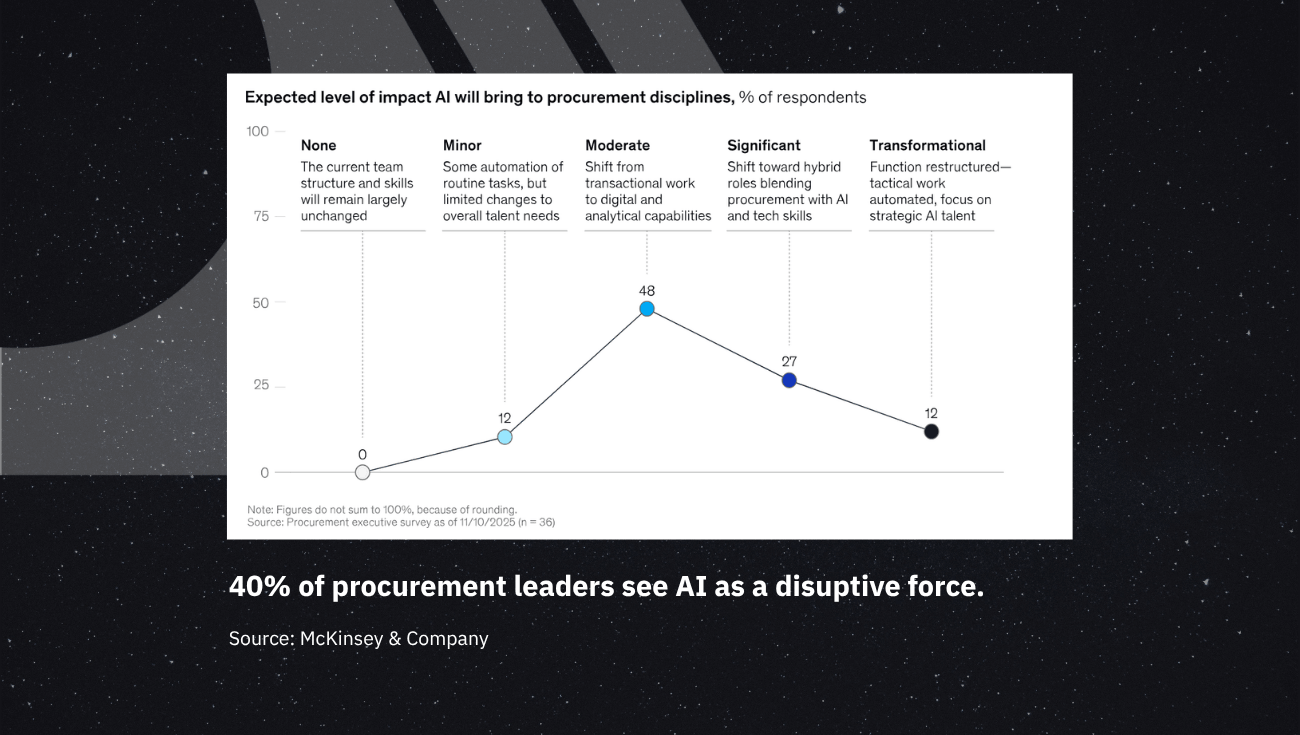
There is a sense of excitement in corporate headquarters and procurement departments. Everyone is talking about Agentic AI, and many are already experimenting with it. The problem is that many of these projects will fall short of expectations in actual operation. Not because the technology is incapable, but because there is a crucial missing link between a compelling demo and a robust process in technical procurement: structured, integrated, and reliable industry data.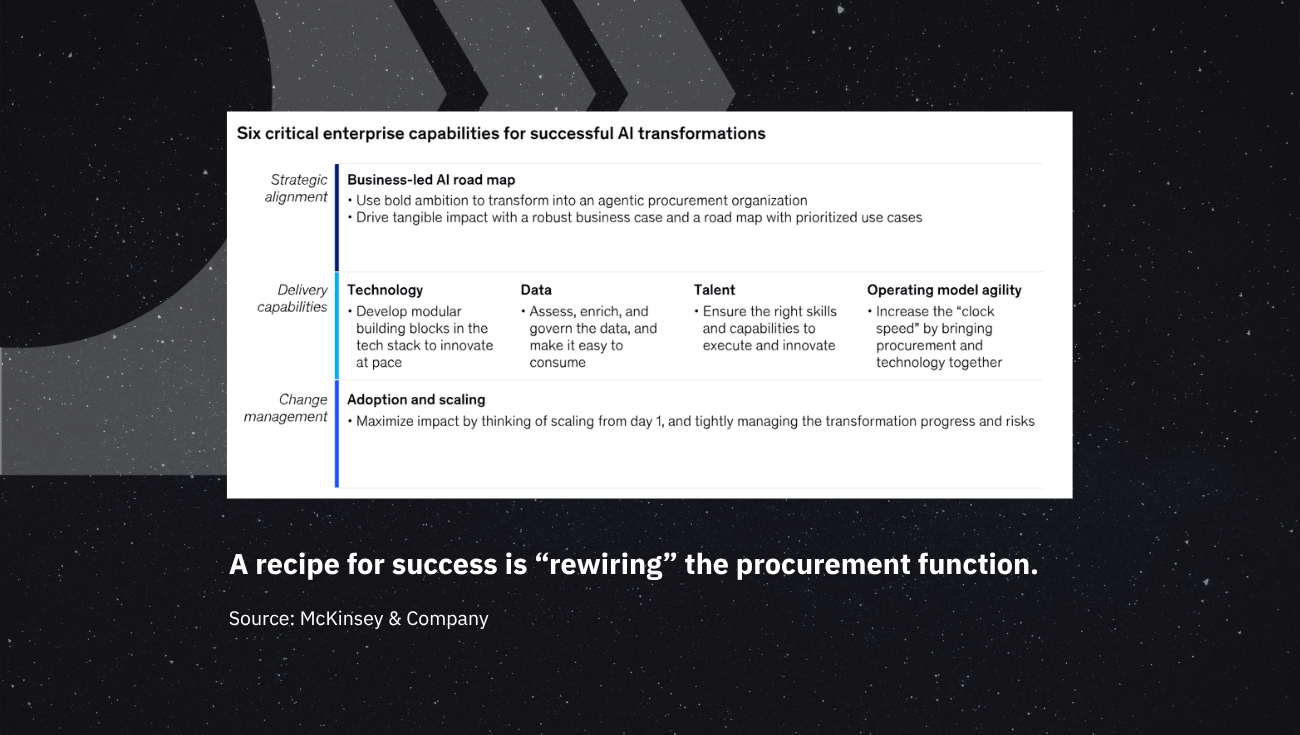
ChatGPT: Why understanding alone isn’t enough
The mistake begins with a misunderstanding. Companies deploy ChatGPT, Claude, or other generative language models and expect rapid progress. That’s understandable. These systems are already capable of an astonishing amount today: formulating texts, categorizing technical content, interpreting drawings, and revealing initial connections. But this is precisely where the misunderstanding begins. Because what impresses in a demo is far from sufficient for operational procurement. What matters is not whether a model fundamentally understands something, but whether the results are reliable, standardized, integrable, and robust enough to support concrete procurement decisions. This includes, among other things, the evaluation of manufacturing processes and prices, as well as the analysis of supplier structures.
Unless you're an expert, you won't notice it right away. The answer seems plausible, and the interaction feels intuitive. But in technical procurement, where decisions involve millions, plausibility isn't enough. What matters there are reproducibility, context, and the ability to integrate with real-world processes.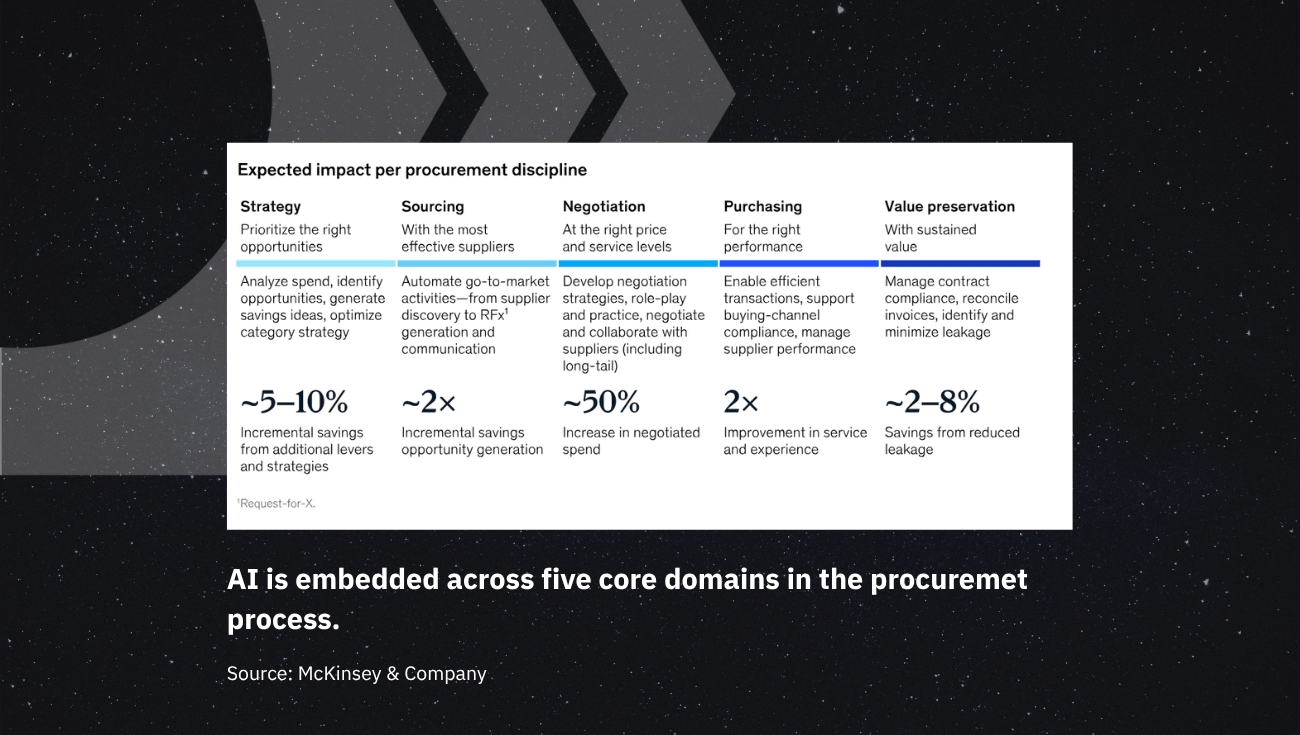
Agents without data are blind
The real crux of the matter lies elsewhere: AI agents need a robust data layer. Design data from CAD systems, linked with ERP and PLM information, supplier knowledge, manufacturing logic, and historical prices - that is the currency of technical procurement. It is precisely this structure that is missing in many companies. General-purpose AI can build on this, but it does not generate this industrial database on its own. And without this foundation, results often remain inconsistent, non-standardized, non-ERP-compatible, and thus of limited operational use. The problem, then, is not understanding, but reliability, structure, and integration.
So what does technical procurement really need? Not yet another interface, but an industrial data layer that makes design data actionable. A layer that recognizes geometries, standardizes features, maps manufacturing logic, and links this information to ERP, PLM, supplier, and process data. Only then can AI agents work productively - not as a flashy demo, but as a robust tool in procurement.
McKinsey & Company describes a hybrid work environment: humans for creative and strategic tasks, AI agents for scalability and speed. That sounds promising - but only if the foundation is right. Without an intelligent data platform that structures and standardizes engineering data and links it to real-world procurement and manufacturing information, every agent remains an empty promise. We have been working on this very issue since 2020.
Agentic AI will transform technical procurement. But the difference between hype and productive use doesn’t lie in even better models. It lies in better-integrated data. The questions companies should be asking themselves are therefore: Is our data in the industrial environment truly ready for autonomous agents? How do I bring together data silos from engineering and procurement (ERP) and make them “agent-ready”? Those who don’t have an answer to this aren’t experimenting with the future - they’re experimenting with the budget.
The future doesn’t belong to those who talk the loudest about AI. It belongs to those who have their data under control.
Time to shape your procurement?
Time to shape your procurement?
Related Articles
How BHS Corrugated Reduced Procurement Costs with PartSpace AI
Discover how BHS Corrugated modernized technical procurement with PartSpace AI. Learn how AI-powered price validation, CAD analysis and supplier benchmarking helped reduce procurement costs and improve purchasing efficiency.
Cloud vs. On-Premises: Why AI Is Setting New Infrastructure Standards in Technical Procurement
AI is reshaping technical procurement — but scalable performance requires the right infrastructure. Learn why cloud-based AI platforms outperform traditional on-premises systems in CAD analysis, supplier intelligence, security, and operational scalability for modern manufacturing companies.
Value Analysis is changing and what to expect at the VDI conference 2026
At VDI 2026, one thing is becoming clear: cost optimization is shifting from negotiation to data-driven decision-making. As companies like Siemens demonstrate measurable savings through large-scale cost transparency, value analysis is entering a new phase. This article explores how leading industrial organizations are redefining cost strategy—and why scalable cost intelligence is becoming a critical competitive advantage.