What ROI Can Manufacturers Expect from Modern Procurement Transformation?
ROI in industrial procurement has fundamentally changed.
Where procurement was once measured primarily on negotiated price reductions, today’s leading manufacturers evaluate return on investment across cost, speed, resilience, data quality and cross-functional impact.
For companies operating in machining-intensive, drawing-based environments, ROI is no longer a vague promise; it is measurable, trackable and increasingly expected by executive leadership.
This article explores how small, mid-sized, and large manufacturers think about ROI, the role procurement plays in achieving it and how data- and AI-driven sourcing models quietly accelerate results.
Why ROI Expectations in Procurement Are Rising
Across aerospace, automotive, machinery, industrial equipment, and medical manufacturing, procurement is under pressure from multiple sides:
Volatile material and energy prices
Increasing part complexity and customization
Longer RFx cycles and supplier capacity constraints
Executive demand for measurable, repeatable savings
At the same time, organizations have accumulated years of historical purchasing data, CAD models and ERP records; often without the ability to systematically leverage them.
This gap between available data and actionable insight is where modern ROI discussions now start.
ROI by Company Size: How Expectations Differ
Small Industrial Manufacturers (high machining complexity, lean teams)
How they define ROI
Immediate and visible cost savings
Reduction of manual effort in sourcing and quoting
Faster time-to-order for engineering-driven parts
Typical procurement reality
Procurement teams wear multiple hats
Heavy reliance on individual expertise and supplier memory
RFQs and should-costing handled manually or inconsistently
ROI focus areas
5–10% part cost reduction through better benchmarks
30–50% reduction in RFQ cycle time
Faster onboarding of new suppliers without added risk
For these organizations, ROI is often realized quickly by improving cost transparency on drawing-based parts and eliminating repetitive manual work; freeing procurement to focus on negotiation and supplier strategy rather than administration.
Mid-Sized to Large Manufacturers (multi-plant, ERP/PLM maturity)
How they define ROI
Sustainable savings across categories
Scalable procurement processes across regions
Better collaboration between engineering and sourcing
Typical procurement reality
Strong ERP and PLM systems, but fragmented data
Duplicate or near-duplicate parts across plants
Inconsistent pricing for similar components
ROI focus areas
8–15% reduction in addressable component spend
Standardization of parts and drawings
Improved negotiating leverage through data-backed should-costs
Reduction in supplier base complexity
At this level, procurement ROI is structural.
Procurement becomes a value creation function, using data to guide engineering decisions early and reduce downstream sourcing friction.
Large Global Enterprises (global sourcing, executive oversight)
How they define ROI
Enterprise-wide impact with CFO-level visibility
Predictability and governance across sourcing decisions
Long-term cost avoidance
Typical procurement reality
Tens of thousands of drawing-based parts
Multiple ERPs, PLMs, and regional sourcing teams
High exposure to supplier risk and cost variance
ROI focus areas
Double-digit savings on selected categories
Measurable decrease in redundant and duplicate parts
Improved part standardization across engineering and procurement
Shorter sourcing cycles across global plants
Higher percentage of parts with reliable should-cost models
Supplier consolidation without supply risk
For these organizations, ROI must be provable, repeatable, and auditable, often tied directly to transformation initiatives sponsored by the CFO, COO, or CTO.
The Evolving Role of Procurement in ROI Creation
Across all company sizes, one trend is consistent:
Procurement is moving from execution to intelligence.
Modern procurement teams are expected to:
Act as data stewards and data-driven negotiators
Translate engineering complexity into commercial insight
Provide early cost guidance during design before release
This shift requires:
High-quality (cleaned) master data
Access to historical purchasing intelligence
Tools that scale expertise beyond individual buyers
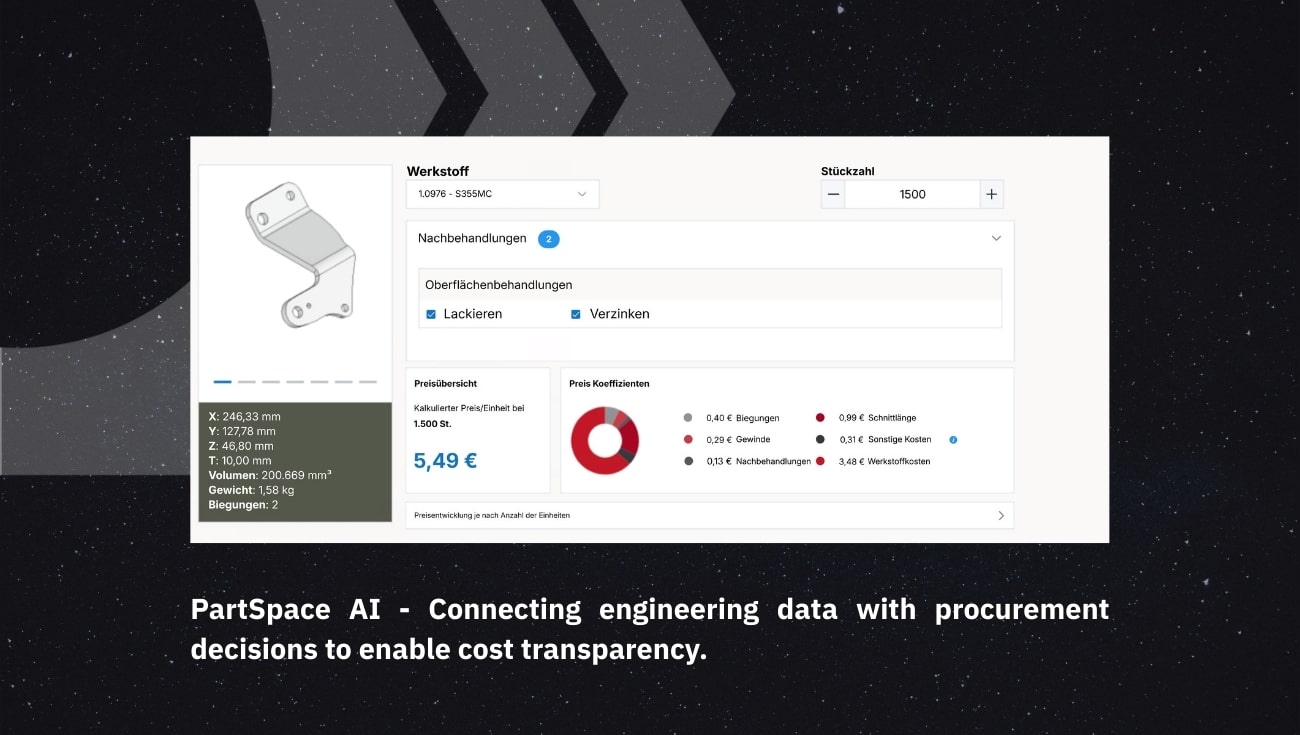
When procurement can answer questions like “What should this part cost?”, “Have we bought something similar before?”, or “Which suppliers are best suited for this geometry?” ROI follows naturally.
Where Data-Driven Procurement Quietly Multiplies ROI
The strongest ROI outcomes increasingly come from organizations that connect:
CAD and drawing data
Historical purchasing records
Supplier performance information
This enables:
Automated should-costing
Similarity-based part analysis
Faster supplier shortlisting
Data-backed negotiations
Rather than replacing procurement expertise, modern AI-supported platforms amplify it, allowing teams to act faster, with more confidence and across far larger datasets than manual approaches ever allowed.
Solutions like PartSpace AI are often introduced not as disruptive overhauls, but as pragmatic accelerators, quietly turning existing data into measurable results while keeping humans firmly in the loop.
Measuring ROI: Metrics That Matter
Leading industrial organizations track ROI through a combination of:
% reduction in part cost
RFx cycle time reduction
Increase in parts with reliable should-costs
Master-data completeness
Supplier consolidation rates
Engineering-to-procurement handover speed
The most successful teams align these metrics directly with executive priorities—making procurement ROI visible far beyond the sourcing function. 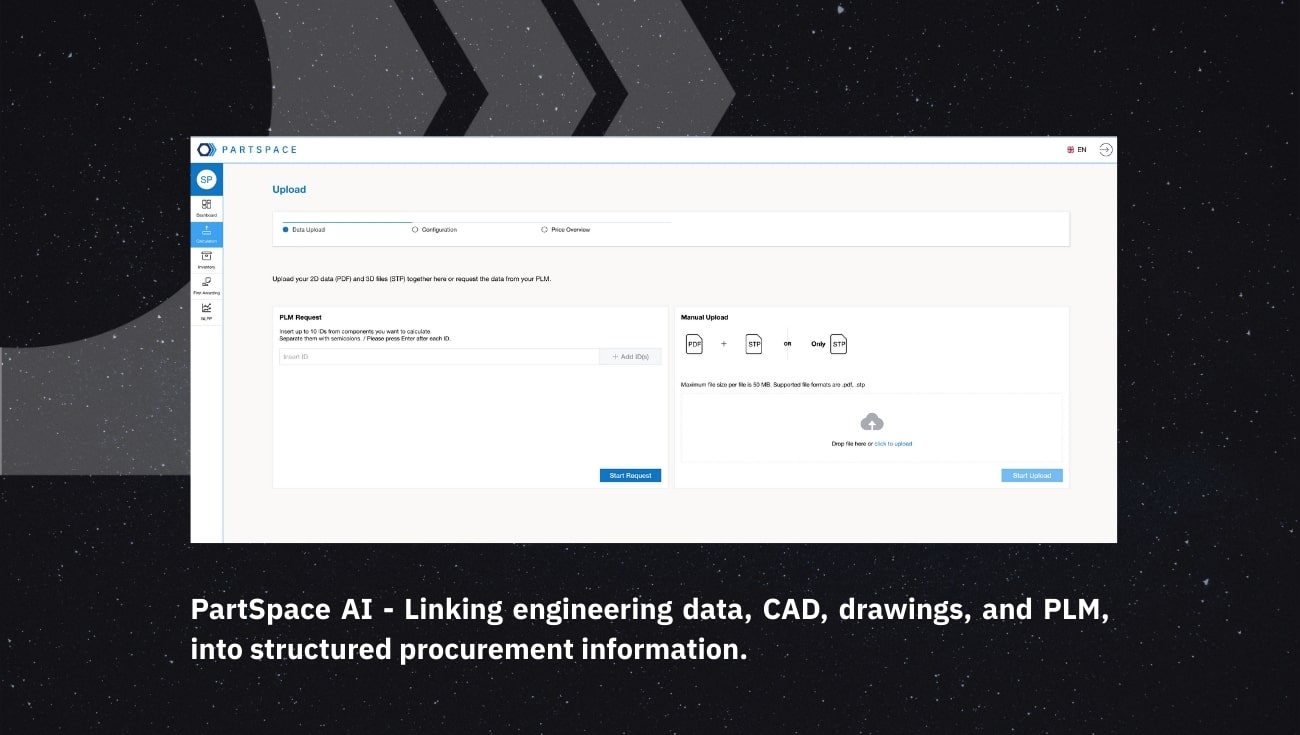
Final Thoughts: ROI Is No Longer Optional
For machining-intensive manufacturers, ROI from procurement transformation is no longer theoretical.
It is expected, measured and increasingly tied to competitive advantage.
Organizations that succeed are not necessarily those with the largest teams, but those that:
Leverage their existing data intelligently
Equip procurement with scalable insight
Align sourcing decisions with engineering reality
In this environment, procurement becomes a strategic engine for sustainable value creation and deliver savings.
How We Connect Your Data to Increase ROI
How We Connect Your Data to Increase ROI
Related Articles
How BHS Corrugated Reduced Procurement Costs with PartSpace AI
Discover how BHS Corrugated modernized technical procurement with PartSpace AI. Learn how AI-powered price validation, CAD analysis and supplier benchmarking helped reduce procurement costs and improve purchasing efficiency.
Cloud vs. On-Premises: Why AI Is Setting New Infrastructure Standards in Technical Procurement
AI is reshaping technical procurement — but scalable performance requires the right infrastructure. Learn why cloud-based AI platforms outperform traditional on-premises systems in CAD analysis, supplier intelligence, security, and operational scalability for modern manufacturing companies.
Agentic AI: Why most AI agents in technical procurement will fail
Agentic AI promises to transform technical procurement—but most implementations are set up to fail. The issue isn’t the capability of AI models like ChatGPT, but the absence of structured, integrated industrial data. Without a solid data foundation linking CAD, ERP, PLM, and supplier insights, AI agents remain impressive demos rather than reliable tools. This article explores why data—not algorithms—is the true bottleneck, and what companies must fix to unlock real value.